

“Do not be conformed to this world, but be transformed by the renewal of your mind, that by testing you may discern what is the will of God, what is good and acceptable and perfect.” Romans 12:2
Curriculum Vision
At St Hilda’s, our Social Sciences curriculum is rooted in our Christian vision of enabling every student to flourish through understanding themselves, others, and the society we share. From GCSE to A-level, students embark on a transformative journey exploring the human mind, social institutions, and crime, developing as critical thinkers who analyse behaviour through both individual and societal lenses. We nurture emotional intelligence, empathy and logical reasoning, teaching students to engage with empirical research and evaluate evidence scientifically whilst appreciating the nuanced interplay between micro factors like cognition and macro forces such as cultural norms and economic structures. Through rigorous debate, independent investigation and collaborative learning, students gain the insight to question inequality, challenge prejudice and understand complex social problems with compassion and rigour. Our ambitious curriculum reflects our students’ diverse backgrounds, ensuring all feel valued whilst equipping them with the knowledge and skills to pursue rewarding careers and contribute meaningfully as informed, compassionate citizens who can build a more just and flourishing society for all.
Curriculum and Assessment Maps
YEAR 10
Psychology

Sociology
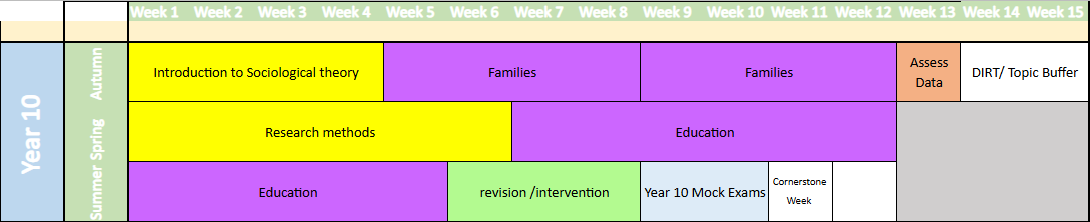
YEAR 11
Psychology

Sociology

YEAR 12
Psychology
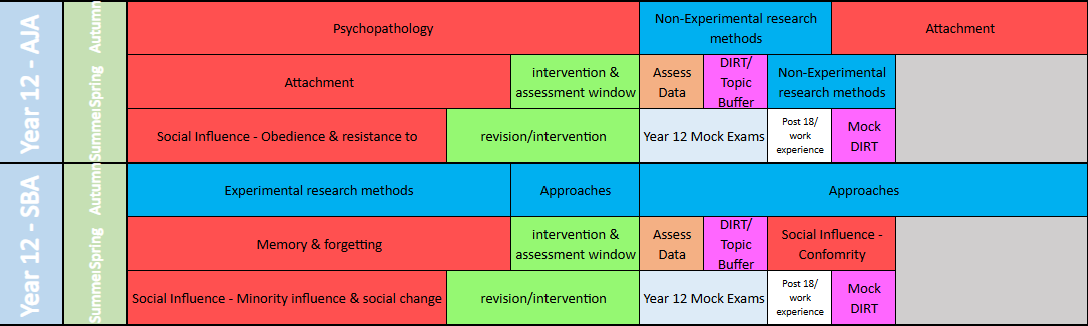
Sociology

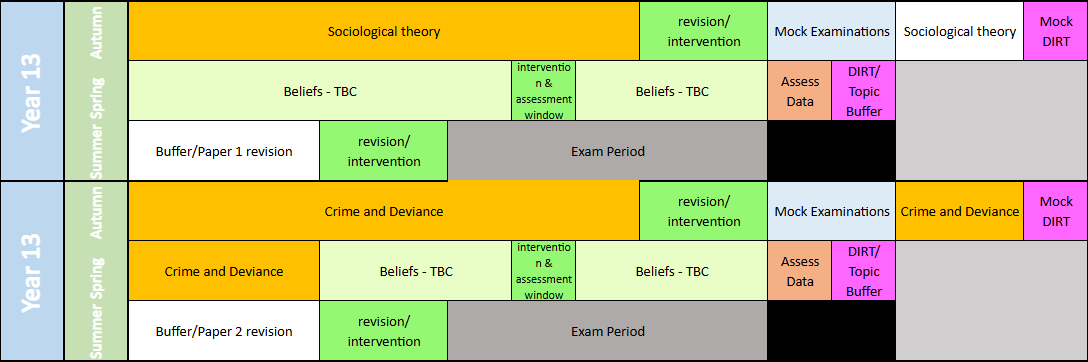
YEAR 13
Psychology
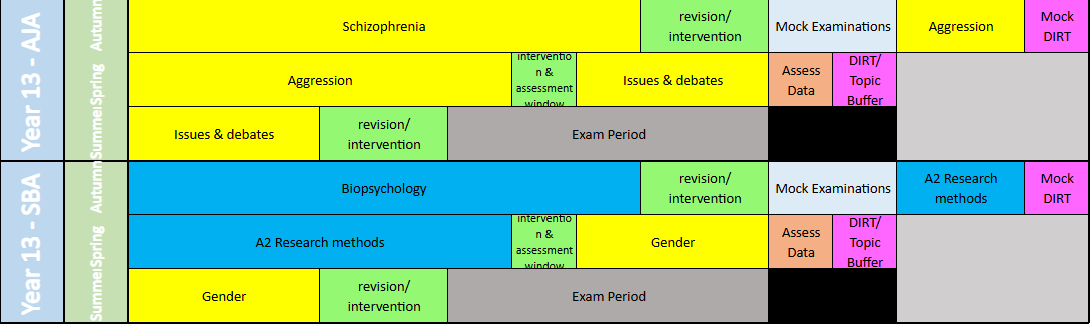
Sociology
Further Information
STAFF
The Social Sciences Department consists of the following staff:
Mr S Ben Ali (Head of Department)
Ms A Gorst
Mrs A Jan
Miss C Bentley
Mrs J Gregson
The department has five teachers of Psychology, Sociology and Criminology.
All work together extremely well as a team and are very supportive to the Head of Department. Under the direction of the Head of Department members share responsibility for the progress of students throughout Key Stage 4 and St Hilda’s College.
ADDITIONAL INFORMATION
The Social Sciences department delivers a carefully sequenced curriculum bespoke to our learners’ needs, identifying existing mental frameworks and key threshold concepts whilst incorporating sequential and spiralled learning to deepen understanding. Our specialist teachers, equipped to teach across Psychology, Sociology and Criminology, create supportive learning environments where all can flourish. Units of work explicitly outline teaching, assessment and key concepts whilst identifying potential misconceptions. Resources—such as our booklets, core notes and revision materials—cater to diverse needs whilst providing a standardised implementation, supported by our student-facing SharePoint site for flexible access to high-quality materials. Assessment is rigorous and varied, incorporating timed extended responses, low-stakes quizzes, mastery assessments and full papers that mirror examination requirements. Students actively engage with our prescribed independent study programme and utilise self-guided Powerful Knowledge Progression Grids to facilitate self-reflection and track progress, with all practices aligned to departmental and school policies ensuring consistency and excellence.
HOW CAN PARENTS HELP?
Social Science students start to flourish when they develop the habit of using what they learn through their studies to understand the world around them. You can help by encouraging students to develop the range of their interests beyond the curriculum and pursue topics and ideas of personal importance to themselves. Doing this can be as simple as asking them about what they have been learning, or being prepared to offer your own experiences and insights to a conversation about a recent topic.
Those Social Science students who achieve the most are frequently those who have extended their knowledge of the field through their own research and reading. Encouraging them to subscribe to a relevant magazine, join the British Psychological Society as a student member, attend university masterclasses on psychological/sociological topics, watch or listen to documentaries on TV or radio or simply to borrow and read books from the library can only help.
Parents and carers can also play a crucial role in helping students to develop the beliefs and study habits that support achievement in Social Sciences. This would include:
Stressing that achievement in any subject is the result of sustained effort, not innate ability.
Discouraging students from comparing themselves with others and focusing them on whether they are making progress against their previous performance.
Encouraging them to follow the advice given in feedback on their written work.
Prompting them to prepare sufficiently for assessments and exams by spacing their learning out – not cramming at the last minute.
Encouraging the use of active learning techniques involving lots of self-testing.
Prompting them to practise important skills like essay writing under timed conditions.
WHERE NEXT
Sociology:
In the field of Sociology:
Sociologist
Academia
Associative careers that Sociology can facilitate:
- Social researcher or Policy analyst
- Police or probation officer
- Teacher or education officer
- Journalist or communications officer
- HR or diversity and inclusion specialist
- Social or community worker
Psychology:
In the field of Psychology:
Clinical Psychologist
Forensic Psychologist
Educational Psychologist
Occupational Psychologist
Sports Psychologist
Child Psychologist
Neuropsychologist
Counselling
Associative careers that Psychology can facilitate:
Teaching
Special Educational Needs coordinator (SENCO)
Advertising
Police Force
Prison & Probation services
Life Coach
Nursing
Criminology:
In the field of Criminology:
Criminologist
Academia
Associative careers that Criminology can facilitate:
- Police or probation officer
- Youth justice or prison officer
- Intelligence analyst
- Social or community worker
- Policy or civil service officer
- Victim support or rehabilitation worker