
Labour Market Information
As the world of work changes, it is important for students to understand Labour Market Information (LMI) to ensure they are aware where different jobs are needed around the country and what types of jobs may need more people in the future.
Below provides more information about what LMI actually means.
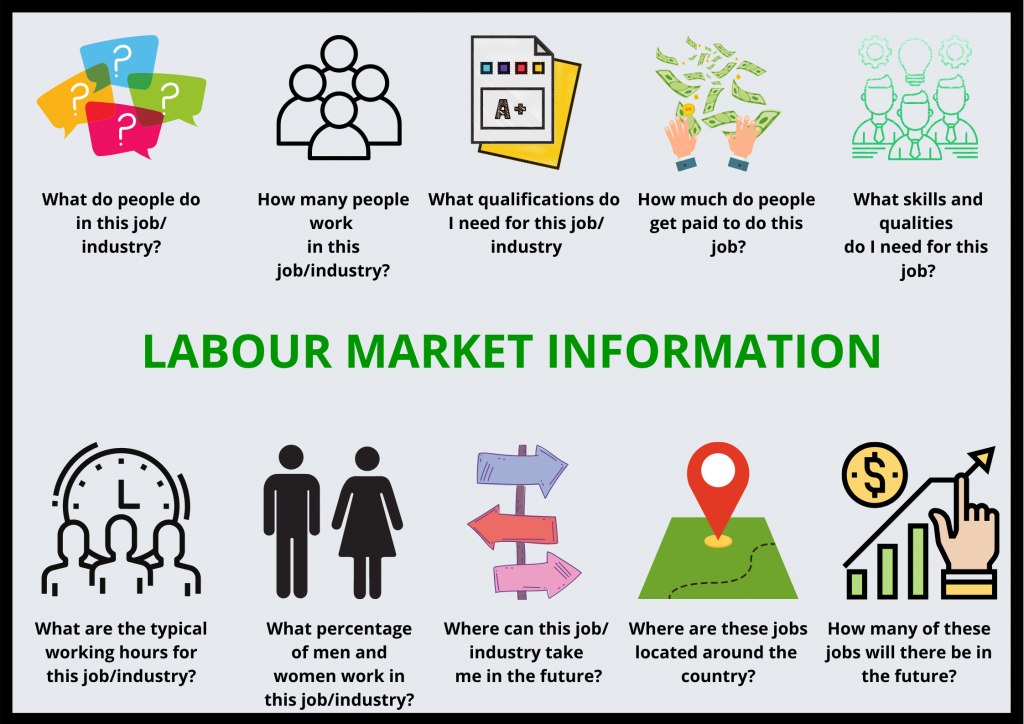
LMI means finding out the following things about different job roles or career pathways…
Watch this video for more information about understanding the labour market
What is Labour Market Information [LMI] ?
LMI is information relating to the world of work, employment trends, job roles and job availability.
Why is it important?
When choosing a course, job or employment sector to work in, it is important to know about your local labour market. Will there be jobs available in your area of interest?
Liverpool Labour Market Information
Businesses across the Liverpool City Region plan to create 100,000 jobs in various sectors over the next 10 years. Pay attention to the industries that are growing in your city. Explore company websites and social media platforms like YouTube, Twitter, Facebook, and LinkedIn for more information.
Examples of Growing Sectors, Roles, and Supporting Statistics:
SuperPort
Types of jobs: Transport, Communications, Manufacturing, Finance (e.g., Supply Chain Managers, Forklift Truck Operators, Load Planners)
Companies: Stobart Group, Atlantic Container Lines, Cammell Laird, Peel Group
Fact: SuperPort is an integrated cluster of logistics assets, delivering faster, greener global market access for business to and from the northern UK and Ireland via an enlarged post-Panamax container port.
Health & Life Sciences
Types of jobs: Biomedical Sciences, Biology, Biotechnology, Pharmacology
Companies: GSK, Seqirus, Eli Lilly, Liverpool School of Tropical Medicine, NHS
Fact: The sector contributes over £170 million per year to the local economy and supports between 6,000–10,000 jobs. There are 28,264 science and technology students at local universities.
Advanced Manufacturing
Types of jobs: Integration, Additive Manufacturing, Cyber Security, Automation
Companies: Jaguar Land Rover, Unilever, Pilkington, Ineos
Fact: Manufacturing is a long-established part of Liverpool’s economy, with world-leading positions in chemicals, vaccines, pharmaceuticals, and motor vehicle production.
Financial and Professional Services
Types of jobs: Banking, Accountancy, Legal, Administration
Companies: Pershing, TATA Consultancy Services, Ernst and Young, Santander
Fact: The North West has one of the strongest financial and professional services sectors outside London.
Low Carbon Economy
Types of jobs: Waste Management, Renewable Energy, Environmental Consultancy
Companies: Cammell Laird, Veolia, Peel Energy
Fact: The sector contributes over £2 billion to the City Region’s economy, employing over 22,000 people in 1,400 companies.
Visitor Economy
Types of jobs: Event Managers, Tourist Guides, Hospitality, Retail
Companies: Aintree Racecourse, Liverpool & Everton Football Clubs, Hilton
Fact: The Visitor Economy is worth £4 billion and supports over 50,000 jobs in the region.
Creative and Digital Industry
Types of jobs: Programming, TV Production, Graphic Design, Game Design
Companies: IBM, NHS, Ripple Effect, Liverpool Empire
Fact: Liverpool’s creative industries employ more than 48,000 people across 6,800 businesses.