

Faith and prayer are the vitamins of the soul; man cannot live in health without them. Health is a state of complete harmony of the body, mind and spirit.
Curriculum Vision
Where would life be without people wanting to learn about Health and Social Care! The world needs kind hearted people who are able to show empathy to all. The staff in the team want to embed a caring nature in our students. They hope to ensure that all of the students not only learning the subject but within the school are aware of the 6 C’. The HSC team want to ensure that all students learn the 6’Cs. These are ‘Compassion’ where would anyone be without this in their lives, ‘Competence’ – the need to know and what to do. ‘Care’ – without this we are all nothing! ‘Commit’ to the teaching and learning of health and social care. ‘Courage’ to see things through not only in the learning but in the doing as well. Finally ‘Community’, where would we all be without everyone? What we do is, think about “Who is in need and how can I help”. The 6C’s are taught and embedded in all that we do in the team.
Curriculum and Assessment Maps
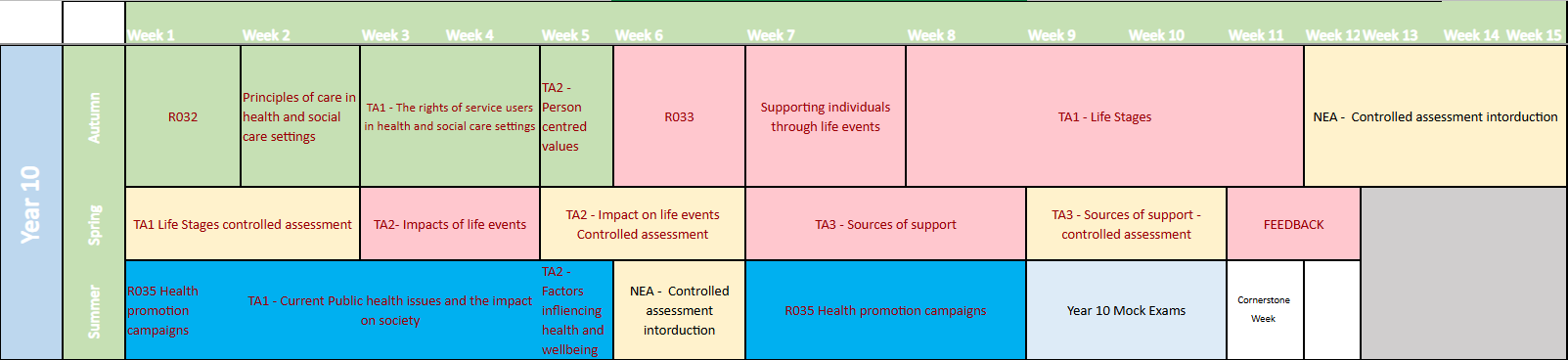
YEAR 10
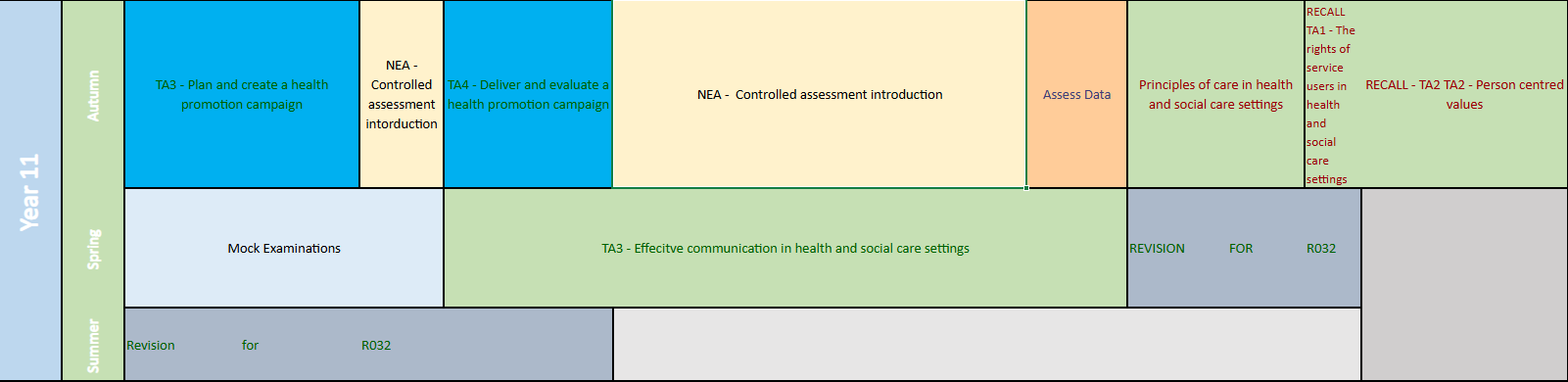
YEAR 11
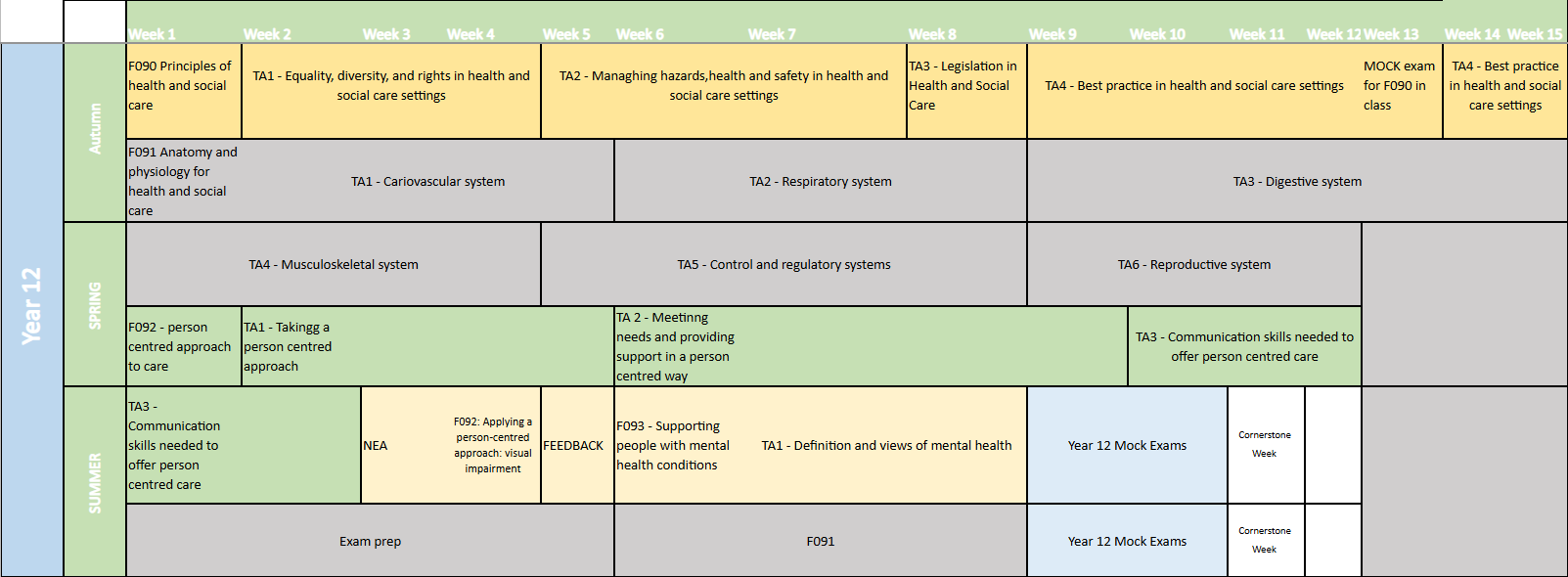
YEAR 12
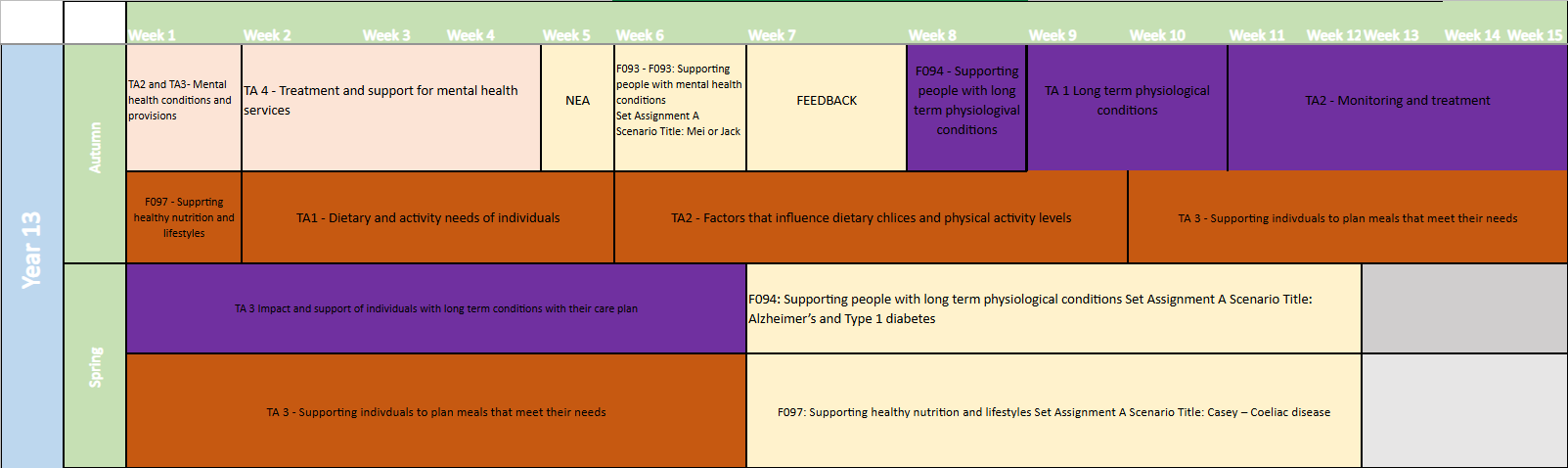
YEAR 13
Further Information
STAFF
The Health & Social Care Department consists of the following staff:
Ms A Shaw (Head of Department)
Ms H Button
Ms E Robinson
The department has three teachers of Health & Social Care. All work together extremely well as a team and are very supportive to the Head of Department. Under the direction of the Head of Department members share responsibility for the progress of students throughout Key Stage 4 and St Hilda’s College.
ADDITIONAL INFORMATION
Our rationale for Health and Social Care at key stage 4 and 5 is to provide a fluid and dynamic knowledge rich option curriculum, which gives students, access and progress to KS5 and beyond. This course will help students to develop key transferable skills and knowledge such as self-evaluation and research skills. Students will study how people grow and develop over the course of their lives from infancy to old age, and the factors that may affect this, such as major life events like marriage or parenthood. Students will analyse this impact from a positive and negative viewpoint, demonstrating empathy. They may apply this to a person of their choice or through a given case study. Students will understand how people adapt to life changes and how the availability of local and national health and social care can support them. Students will research health and social care services in their local community. They will look at how people access the local health and social care services provided which support is offered in the local community. Students will be given the opportunity to demonstrate and apply the key care values to scenarios. Students will develop skills in measuring and interpreting data about someone’s physiological health to design a care plan that will allow them to analyse and improve their health and wellbeing. Overall, students can self-reflect about choices made and how these choices can affect others. Students will benefit from guest speakers from their local community and beyond. Students will have the opportunity to visit a variety of setting such as pre-schools, primary schools and nursing homes. It is the intention to raise student aspirations by developing key links with universities and employers. Students will be able to draw on the knowledge and skills acquired from other GCSE subjects where relevant. Students can use the knowledge and skills from GCSEs generally, giving them the opportunity to apply their academic knowledge to everyday and work contexts. It does not limit progression options because the skills acquired are applicable to a range of future pathways. Over 3 million people work in UK’s health and social care industry. Demand for both health and social care is high and this is likely to continue in the LMI due to an aging population. The demand for people to fill these vital jobs will continue to increase.
HOW CAN PARENTS HELP?
From helping with homework to encouraging a love for learning, your involvement can significantly impact their academic success and overall well-being.
WHERE NEXT
Students will benefit from guest speakers from their local community and beyond. Students will have the opportunity to visit a variety of settings such as pre-schools, primary schools, and nursing homes. It is the intention to raise student aspirations by developing key links with universities and employers.
Over 3 million people work in UK’s health and social care industry. Demand for both health and social care is high, and this is likely to continue due to an ageing population. The demand for people to fill these vital jobs will continue to increase.