

Romans 15:4 – “For whatever was written in former days was written for our instruction that through endurance and through the encouragement of the Scriptures we might have hope.”
Curriculum Vision
History at St-Hilda’s is shaped by our Christian vision and our belief that all students should be given the opportunity to flourish. We have developed and deliver an ambitious and inspirational curriculum that advantages every student. All students will access local, national and world History focusing on the pivotal moments, which will shape their understanding of the world in which they live. We want all students to be able to articulate their knowledge and understanding verbally and in written form. They will develop a strong foundation of transferrable skills such as working independently and as part of a group, as well as the ability to investigate, question and make complex judgements about the topics studied. Students should be able to apply historical concepts and context to relevant situations in their everyday life. Students should then be able to embrace the social, political and cultural makeup of their local community and the wider world. Importantly, students should be able understand their roots as the History curriculum teaches aspects linked to the background of our students allowing all students to flourish.
Curriculum and Assessment Maps
YEAR 7
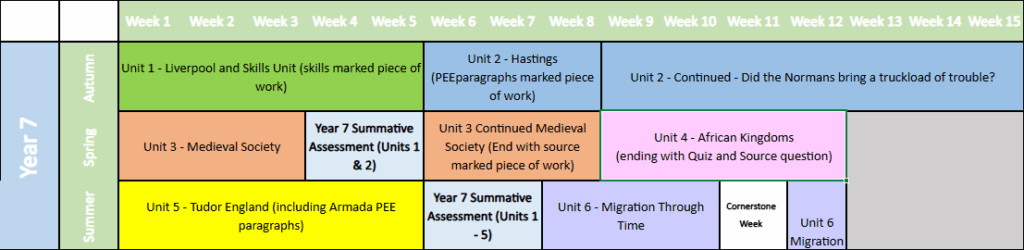
YEAR 8
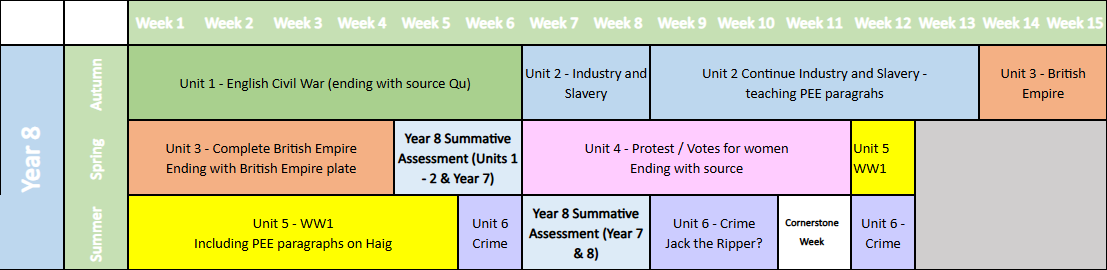
YEAR 9
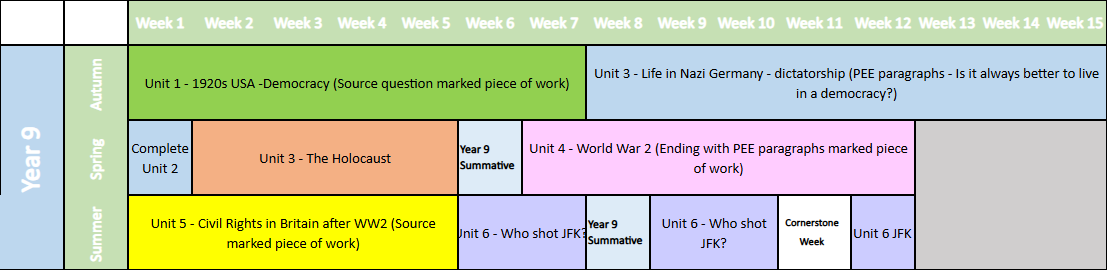
YEAR 10
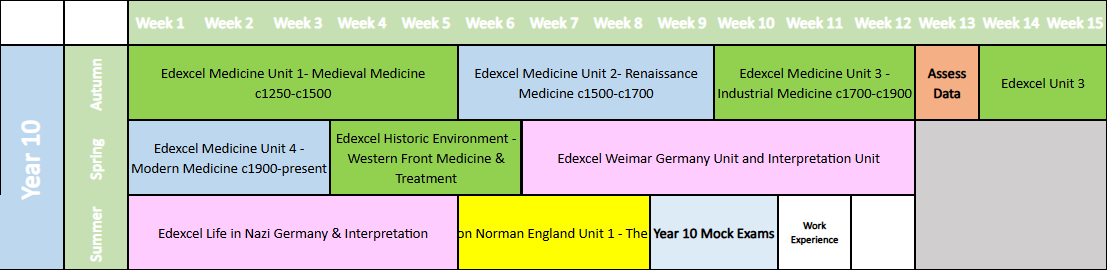
YEAR 11
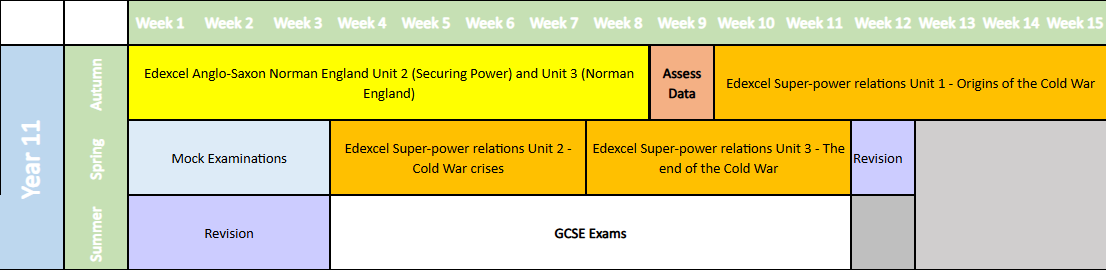
YEAR 12
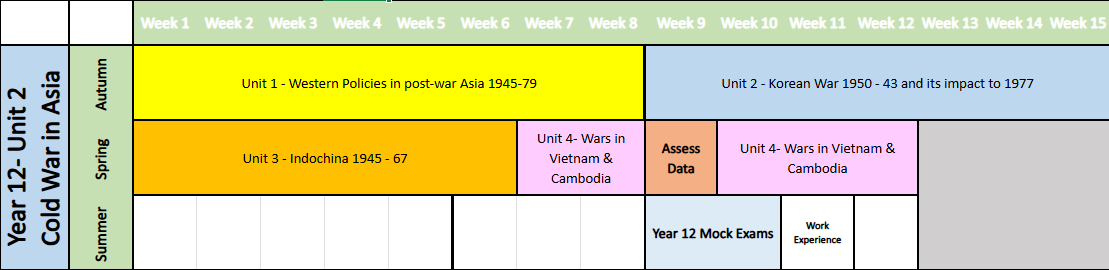
YEAR 13
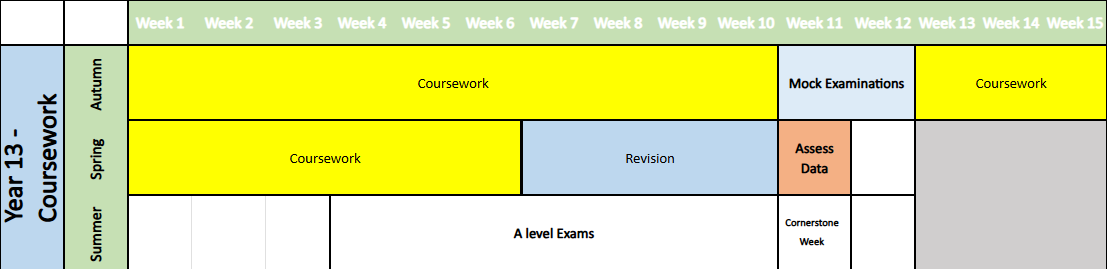
Further Information
STAFF
The History Department consists of the following staff:
Mrs M West (Head of Department)
Mrs H Ray
Mrs F Fitzsimmons
Mr W Stanistreet
Ms T Millward
The department has five Teachers of History. All work together extremely well as a team and are very supportive to the Head of Department. Under the direction of the Head of Department members share responsibility for the progress of students throughout Key Stage 3, Key Stage 4 and St Hilda’s College.
ADDITIONAL INFORMATION
The History department teaches a robust, well-planned curriculum, which builds upon and deepens prior learning. Subject specialists actively contribute to create a supportive learning environment in which all have the opportunity to flourish. The scheme of work outlines how each lesson can be delivered to maximise learning opportunities. The resources and materials provide flexible opportunities for success whilst supporting and challenging all students to further their knowledge and understanding of the subject. Students are actively involved in the rigorous assessment process to facilitate self-reflection and progress. This takes the form of a variety of methods e.g. end of topic assessment, presentation & quiz question, which mirror the departmental feedback policy.
HOW CAN PARENTS HELP?
In History, you can best help by being interested and encouraging your child to talk about the work in which they are currently engaged. You can also prompt her to read teacher comments on written work, act upon them and review work frequently. You may wish to refer to her exercise book, booklet or folder and any course outline sheets/booklets she has been given. We also regularly share suggestions for extra reading or revision that you can encourage your child to engage with.
Interest can also be stimulated by leisure visits to historical sites, while on holiday, or locally at the weekend. Such visits do not have to be directly related to the topic or period under discussion, nor need they be expensive if advantage is taken of family concessions, English Heritage or National Trust membership, or free access to museums. The reading of historical literature, again of any period, could also be encouraged – the advice of the school librarian could be made use of here. In addition, parents could usefully direct attention to the many historically related television programmes which are regularly on offer. We do not particularly recommend general internet searches as these tend to discourage the questioning of material and pupils tend not to read information carefully enough.
Encourage your child to navigate a journey using a map instead of the satnav.
WHERE NEXT
A degree in History can lead to a wide range of attractive (and even lucrative) careers. Frequently linked is Law (qualification requires further training), but also:
- Media work- print journalism, T.V. and radio presenting, research
- Libraries and museums (including the increasing number of historical attractions)
- Politics and the Civil Service-both local and national
- Management and Recruitment Consultancy
- Personnel posts in business enterprises…
The list is endless – it includes anything that demands analytical thinking with the ability to express oneself effectively.
More information about careers using history can be found here: