

Curriculum Vision
Technology is fast paced and dynamic, it is constantly changing around us and shaping the world that we live in. We believe that as technology advances, our students should have the skills and confidence to adapt and thrive. The world of work will look very different for students in the future, and our main aim is to equip them with the confidence to use and create technology to be able to succeed in their future careers.
In IT/Computing we aim to deliver structured, high quality and engaging lessons, that allow all students to achieve their best and foster a sense of lifelong learning. Our lesson sequences are designed to build the students confidence and nurture their creativity. We want to build the students resilience and allow students to reflect on their understanding; becoming excellent problem solvers. Our department sets high expectations of our students and has academic rigour to challenge all students at all levels to achieve their potential, in a supportive and collaborative way.
Our students are encouraged to consider the reliability of the sources that they use and the information that they are gathering, to support their learning across all of their studies. Our schemes of work teach students to use technology safely, respectfully and securely, so that they are supported to be responsible citizens. During lessons, students will discuss current events so that they can assess the impact that technology is having on our lives from a social, ethical, legal, environmental and economic view point.
Curriculum and Assessment Maps
YEAR 7
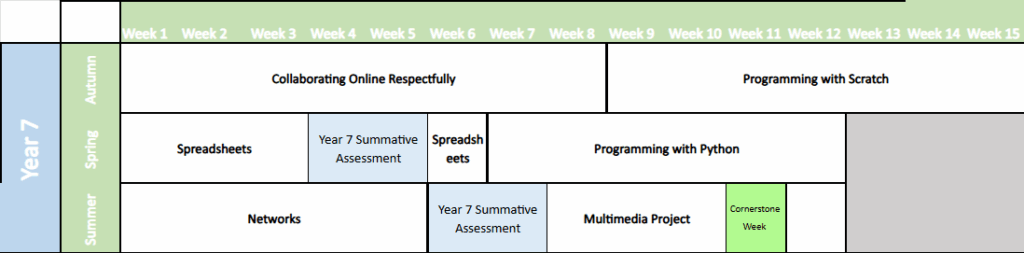
YEAR 8
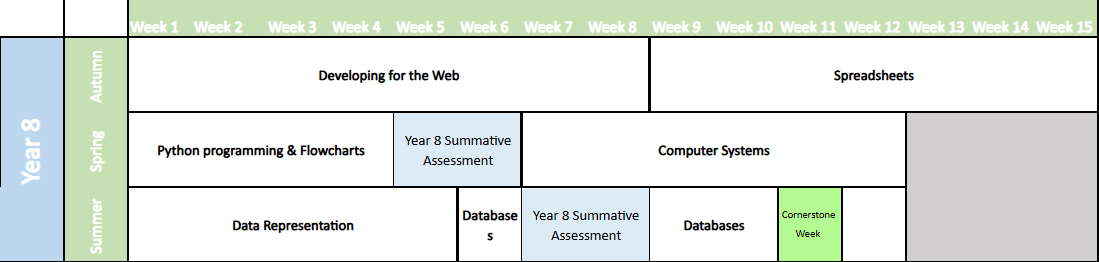
YEAR 9
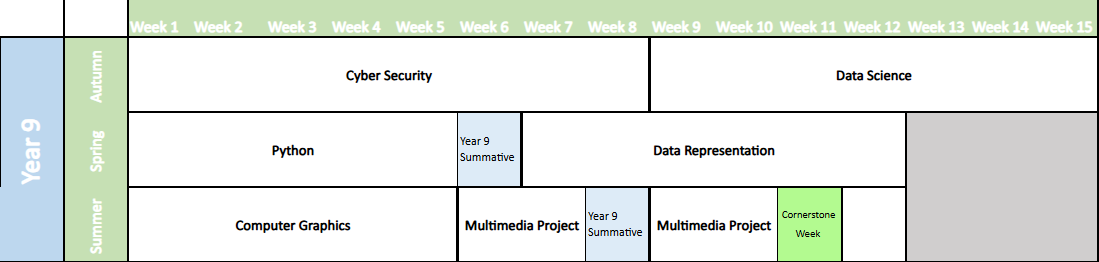
YEAR 10
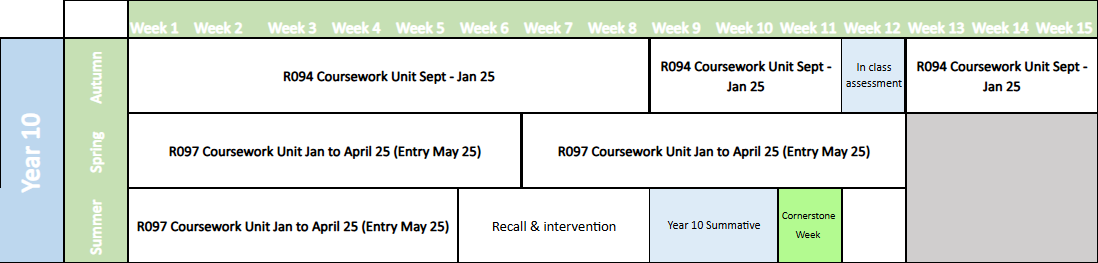
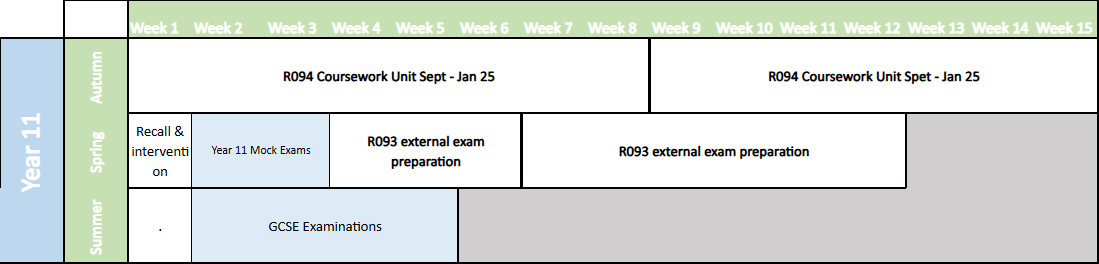
YEAR 11
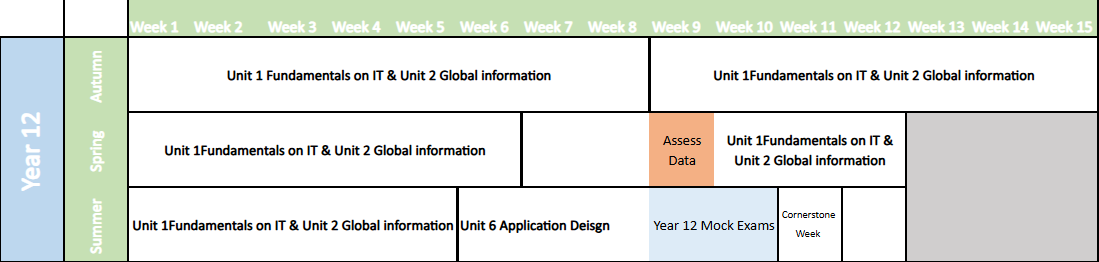
YEAR 12
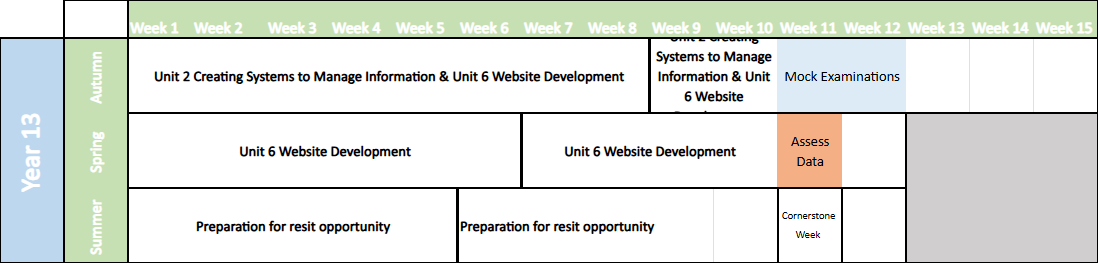
YEAR 13
Further Information
STAFF
The IT & Computing Department consists of the following staff:
Mrs A McDonagh (Head of Department)
Mrs R Banks
The department has two Teachers of IT & Computing. Both work together extremely well as a team. Under the direction of the Head of Department they share responsibility for the progress of students throughout Key Stage 3, Key Stage 4 and St Hilda’s College.
ADDITIONAL INFORMATION
Key Stage 3
At KS3, students follow the National Curriculum as a foundation and have one lesson per week. The curriculum is designed to build upon students skills year on year, to allow the students to follow a clear progression pathway. The lesson sequences are designed to support students with their digital literacy, foster their computational thinking skills and to understand the importance of using technology safely. The curriculum is designed to build the foundational skills needed for students to progress onto the GCSE courses that the department offers.
Key Stage 4 – GCSE
At KS4, students have the option to choose GCSE Computer Science or Cambridge Nationals in Creative iMedia, which is taught over 5 lessons per fortnight.
KS4 – OCR Cambridge Nationals Creative iMedia
The Cambridge Nationals in Creative iMedia qualification assesses the application of creative media skills through their practical use. The course encourages independence, creativity, and awareness of the digital media sector. The students will be equipped with a range of creative media skills and are provided with opportunities to develop transferable skills such as research, planning, and review, working with others and communicating creative concepts effectively. The course allows students to be imaginative in designing and creating digital media products and websites for a given clients’ requirements.
Further details about the specification can be found at:
Year 10 & 11 Specification – https://www.ocr.org.uk/Images/610942-specification-cambridge-nationals-creative-imedia-j834.pdf
Edexcel GCSE Computer Science – 2020 Specification
The GCSE Computer Science course is focused on further developing the student’s skills in computational thinking, data, computers, networks, and issues and impacts of computing in the world today. Students programming skills will continue to develop from their prior learning at KS3 and prepare them for a practical onscreen assessment, which focuses on the ability to analyse and solve problems by designing, writing, testing and refining programs. The course combines both practical assessment and a theoretical examination.
Further details about the specification can be found at:
Sixth Form
KS5 Cambridge Technicals in IT
The Level 3 Cambridge Technicals in IT qualifications help students to achieve their potential and progress to the next stage of their lives, whether that’s higher education, an apprenticeship or employment. The course is designed with refreshing and exciting content that’s modern, engaging, fit for purpose and suitable for the needs of students.
A sound understanding of IT technologies and practices is essential for IT professionals. Information learnt in this course provide a solid foundation in the fundamentals of hardware, networks, software, the ethical use of computers and how business uses IT. Further units will provide a greater understanding of how organisations use information sources both internally and externally and the types of information you will encounter.
Students will study 5 units:
- Fundamentals on IT
- Global information
- Application design
- Project management
- Website design and prototyping
For further information on this qualification and to view the specification, see:
https://www.ocr.org.uk/qualifications/cambridge-technicals/information-technology/units/#level-
KS5 Cambridge Advanced National in Computing: Application development
The Cambridge Advanced Nationals in Computing: Application Development will encourage students to develop key knowledge, understanding and skills. They will think creatively, innovatively, analytically and logically to develop independence and confidence in applying skills that are vital for progression to HE and relevant to the ICT practitioners’ sector and more widely. This course is designed to allow progression onto other related study, such as higher education courses in Computer Science, Computer Games Development, Computing, Creative Computing, Wed and Mobile Development, Wen and User Experience Design.
Through a combination of theoretical study and hands-on experience, you will develop the necessary knowledge and skills that can support progression to higher education computing study.
Students will study 5 units:
- Fundamentals of application development
- Developing application software
- Designing and communicating UX/UI solutions
- Website development
- Immersive technology solution development
Further details about the specification can be found at:
HOW CAN PARENTS HELP?
Parents should not feel under pressure to provide any specific hardware/software. However, some homework will require internet access and access to a PC, therefore, if this not available at home, students will have to complete such homework in homework club.
The schools Microsoft 365 account allow students to access everything they need provided they have an internet connection. Email communication will be received through Outlook as well as other messages and assignments via Teams.
Students all learn computer programming and having software on a computer at home which they can practice on is particularly useful:
Scratch is used in years 7 and is available to use online at http://scratch.mit.edu/
Python 3 is used in years 7 to 13 and is available to download for free from orgMake sure to download a version of Python 3 such as Python 3.7.5 (not Python 2) as we use Python 3 in school.
WHERE NEXT
The purpose of the current Computer Science provision is to provide a sound basis in both computer literacy and application of ICT to practical situations.
This should give students enough grounding to function effectively in the modern day workplace, and to be able to take their studies further should they wish to undertake a degree or follow a specific career in Computer Science.
Understanding more about how computer systems work and learning to write programs to use and control them is clearly beneficial. However, studying Computer Science is more than this, in particular it develops a range of transferrable skills including problem-solving, critical thinking and analysis. These are skills needed in many careers including engineering, science, medicine, financial and resource management careers.